
Old question
Why won’t they stop?
Designing Out Addiction
The method starts with a simple shift: choices are real, but they are never made in an empty space. Look at what surrounds the behaviour, find the earliest changeable point, then make a safer route easier to begin.
Last reviewed: 6 August 2026
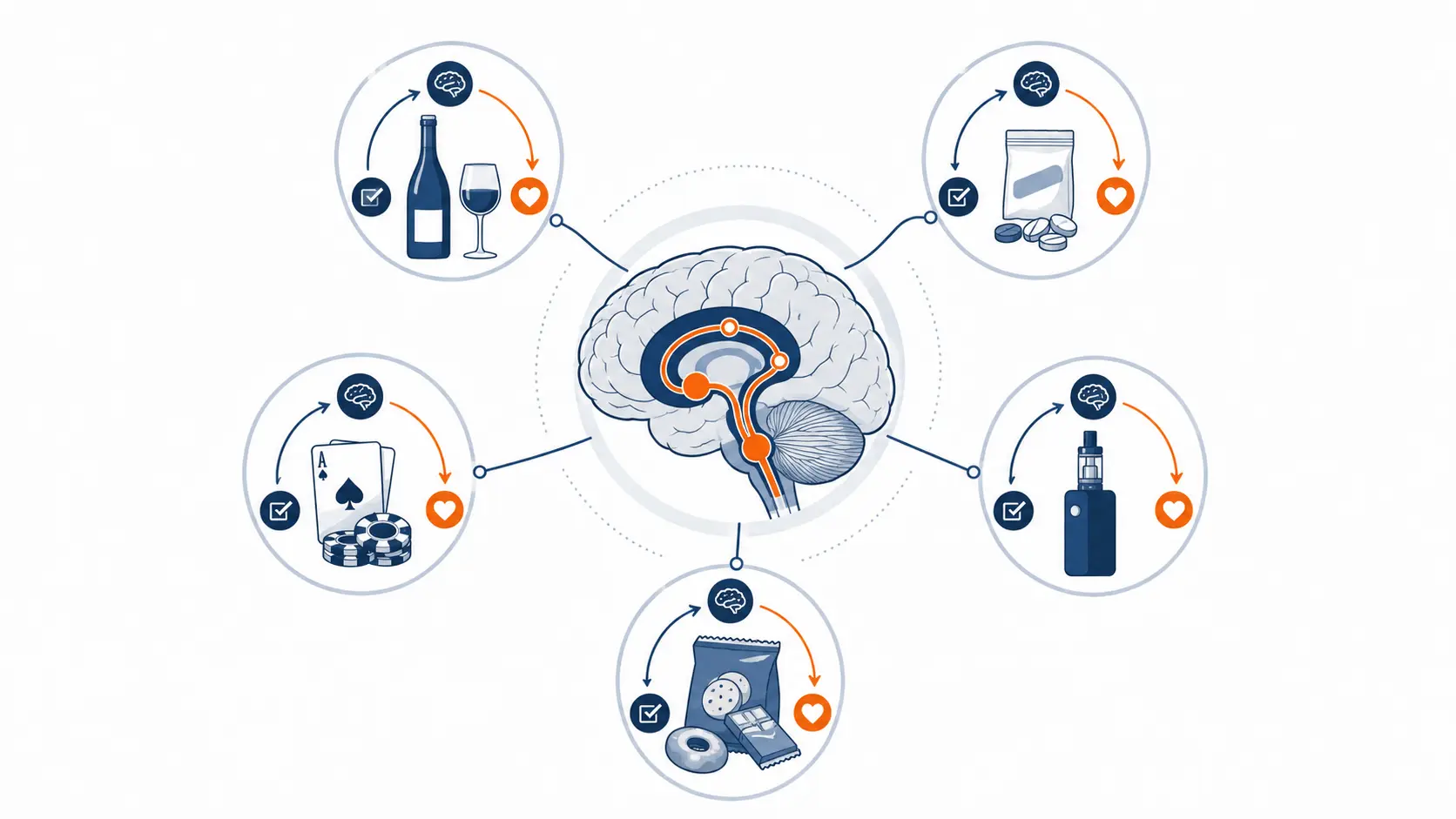
The basic shift
Addictive and compulsive patterns usually grow in a setting. That setting can include stress, trauma, loneliness, boredom, insecure housing, money pressure, digital rewards, routines, easy access and the people around us.
This does not remove personal agency. It means agency has more support when the environment is not constantly rebuilding the old route. The practical question becomes: what can be changed around the next decision?
Why won’t they stop?
What does the behaviour do for them in that moment, and what repeatedly happens before it?
Find the earliest cue, reduce unnecessary access, add a pause and make a viable alternative easier to start.
Brain + environment
Dopamine is often called a pleasure chemical, but that is too simple. It is involved in motivation, wanting, learning and the prediction of reward. With repetition, the brain can begin responding to what predicts a reward: a notification, a familiar road, money arriving, a particular shop or a Friday evening routine.
A cue is therefore more than an idea someone should simply ignore. Learned cues can prepare attention and action. Redesign gives deliberate choice more time to catch up.
Three levels of change
Some changes can be made today. Others sit well beyond one person’s control. Good practice names both instead of disguising a structural barrier as a motivation problem.
Rooms, sleep, food, phone settings, money controls, daily routes and preparation for difficult times.
Supportive relationships, boundaries, peer groups, family routines, belonging and recovery communities.
Housing, transport, treatment access, service rules, advertising, planning, employment and platform design.
Evidence links
Put it into practice
Use a free worksheet to turn the method into a practical test without creating an account.