
Pressure
Availability, advertising, isolation, poor lighting, unsafe spaces, debt, exploitation and routes that repeatedly pass high-risk cues.
For practitioners and organisations
The environment around recovery includes far more than a bedroom. Housing, high streets, transport, treatment access, waiting rooms, appointment systems, licensing and community spaces all shape what is easy to repeat.
Last reviewed: 6 August 2026
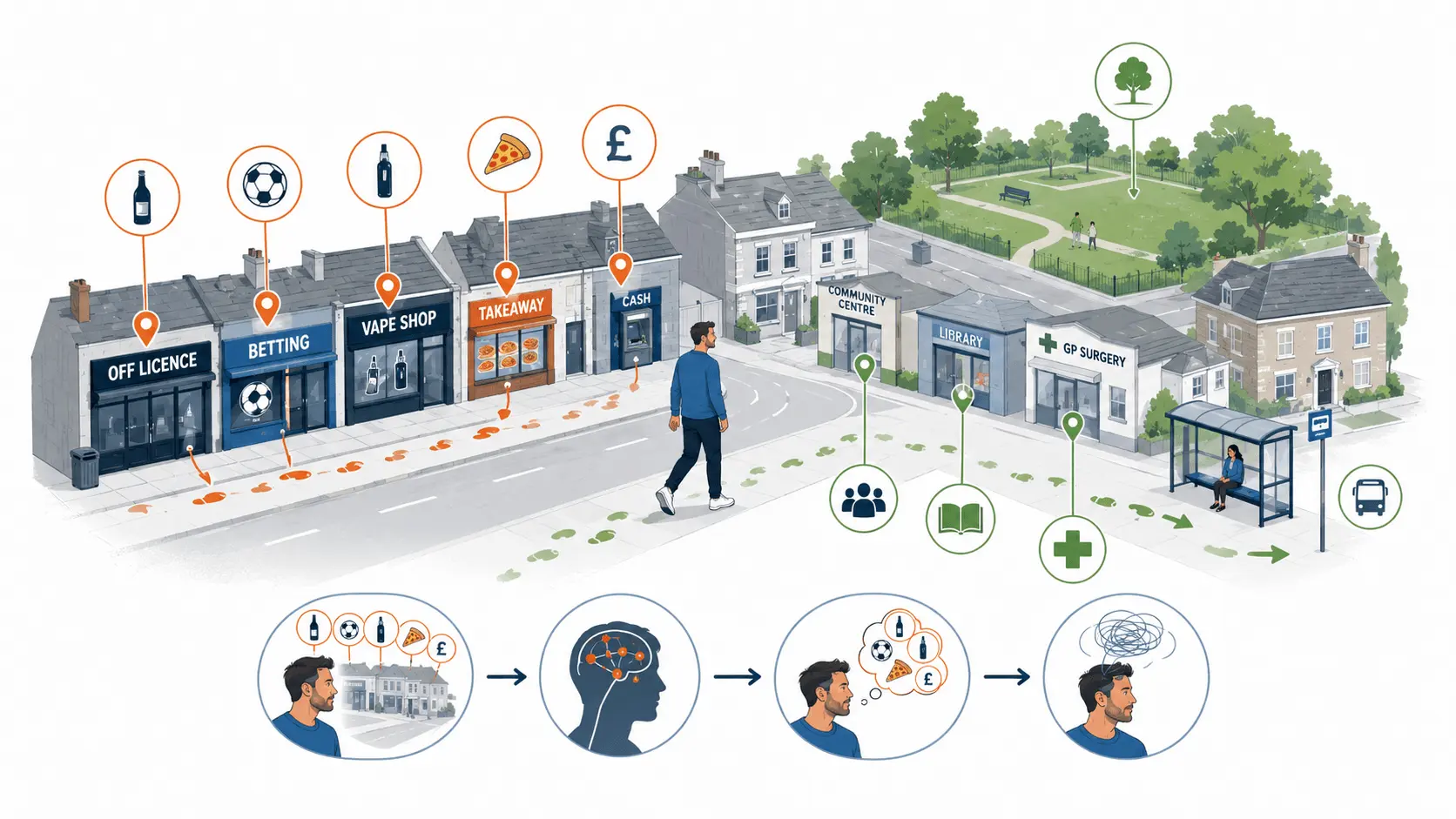
Read the local area as a map
Alcohol availability, gambling, vaping, drug-market activity, fast food, unsafe public space and poor transport can sit alongside parks, libraries, community centres, health care, food access and housing support. The question is not whether a place is simply good or bad, but what it repeatedly makes easy.
Availability, advertising, isolation, poor lighting, unsafe spaces, debt, exploitation and routes that repeatedly pass high-risk cues.
Green space, libraries, sport, youth provision, food access, safer transport, community hubs, health care, treatment and housing support.
Opening hours, travel time, referral steps, digital exclusion, eligibility rules and how easy it is to return after a missed appointment.
Alcohol, gambling, vaping, drug-market activity and other opportunities can cluster along everyday routes.
Cash points, delivery, advertising and always-on digital access can shorten the route from cue to action.
Poor transport, unsafe public space and few evening alternatives can narrow the choices that are realistically available.
Housing is part of recovery
Temporary accommodation, repeated moves, unsafe visitors, exploitation, neighbour conflict and a lack of private space can create conditions that overwhelm a personal plan. Housing stability and safety are active parts of recovery design, not background details.
Treatment environment
A service can make support easier or harder through signage, reception, sensory load, forms, waiting, assessment stages, opening hours and rules for missed appointments. Re-entry is especially important: a difficult week should not automatically create a harder route back to help.
Beyond treatment
Status, belonging, timetable pressure, fatigue, social culture, disciplinary systems and access to confidential help can influence harmful patterns. Good organisational design combines clear boundaries with early routes to support.
Evidence links
Bring it into practice
Use the free Service Design Audit, build frontline knowledge through micro-training, or explore live Zoom and Microsoft Teams training for your team.