
Week 1 · Map
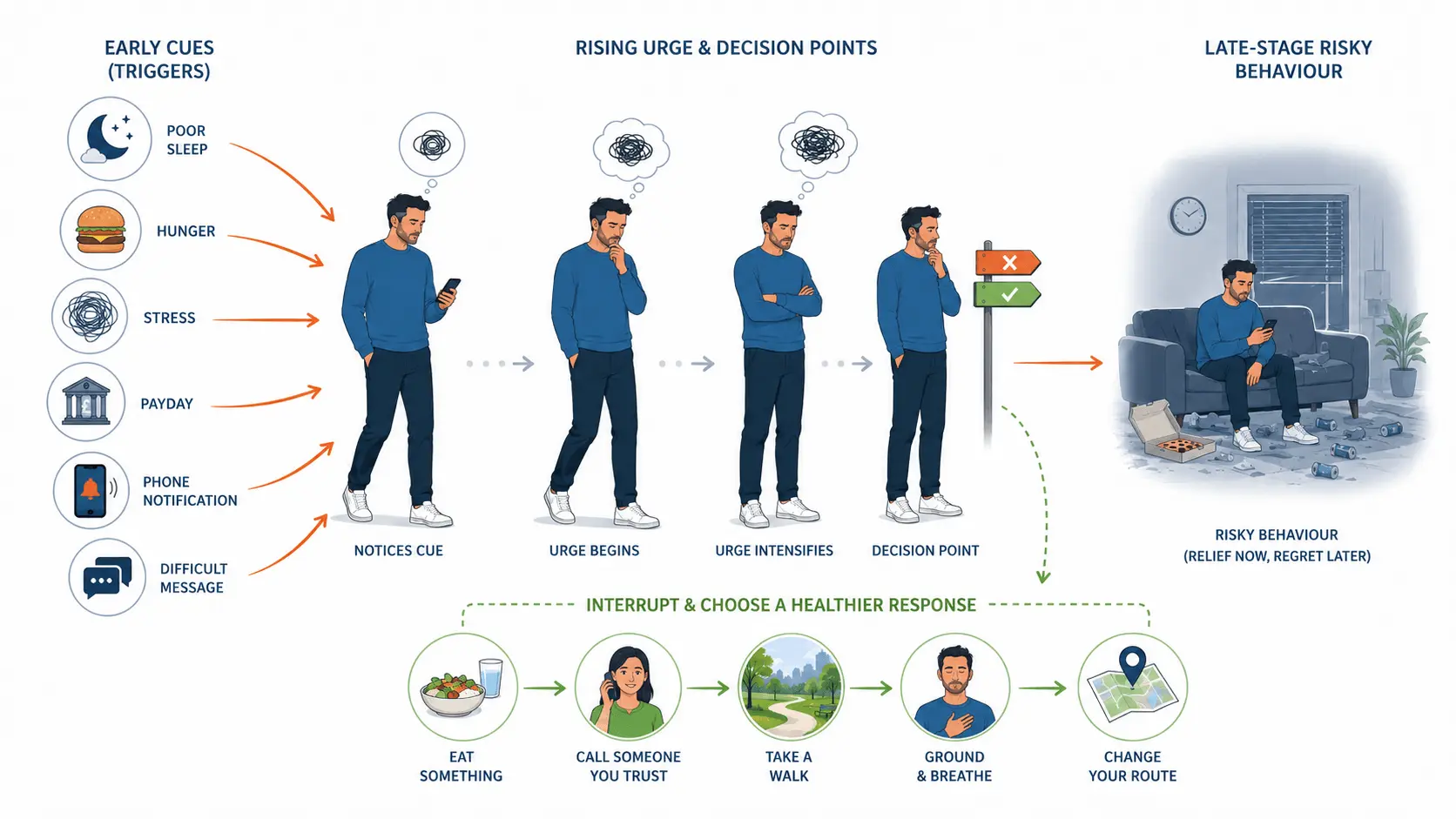
Observe times, places, people, body states, money and digital cues without trying to fix everything at once.
Map · redesign · replace · protect
The 30-day structure provides time to observe a pattern, test environmental changes and review what needs strengthening. It is not a treatment deadline or a promise of recovery.
Last reviewed: 6 August 2026
Week by week
Observe times, places, people, body states, money and digital cues without trying to fix everything at once.
Remove selected cues, add friction and change one part of the environment before the difficult moment arrives.
Build in safer routines, immediate rewards, connection, food, movement and meaningful activity.
Review what helped, find weak points and prepare for future high-risk situations without shame.
Times, places, people, body states, money and digital cues.
Reduce a cue, add friction and prepare before the difficult window.
Add immediate relief, reward, connection, food, movement or meaning.
Keep what helped, find weak points and plan for the situations most likely to return.
Learning, not pass or fail
If a change works in the morning but not at night, or works until payday, or collapses after an argument, the useful question is what the design failed to anticipate. Review earlier and earlier in the chain until you find a point you can change.
In the book
The book expands each stage into practical planning pages, progress trackers, review exercises and tools for preparing for difficult situations. Use the website to understand the sequence, then use the workbook to apply it in greater depth.
Evidence links
Start smaller
Test one change this week, or preview what the complete workbook adds.