
Money
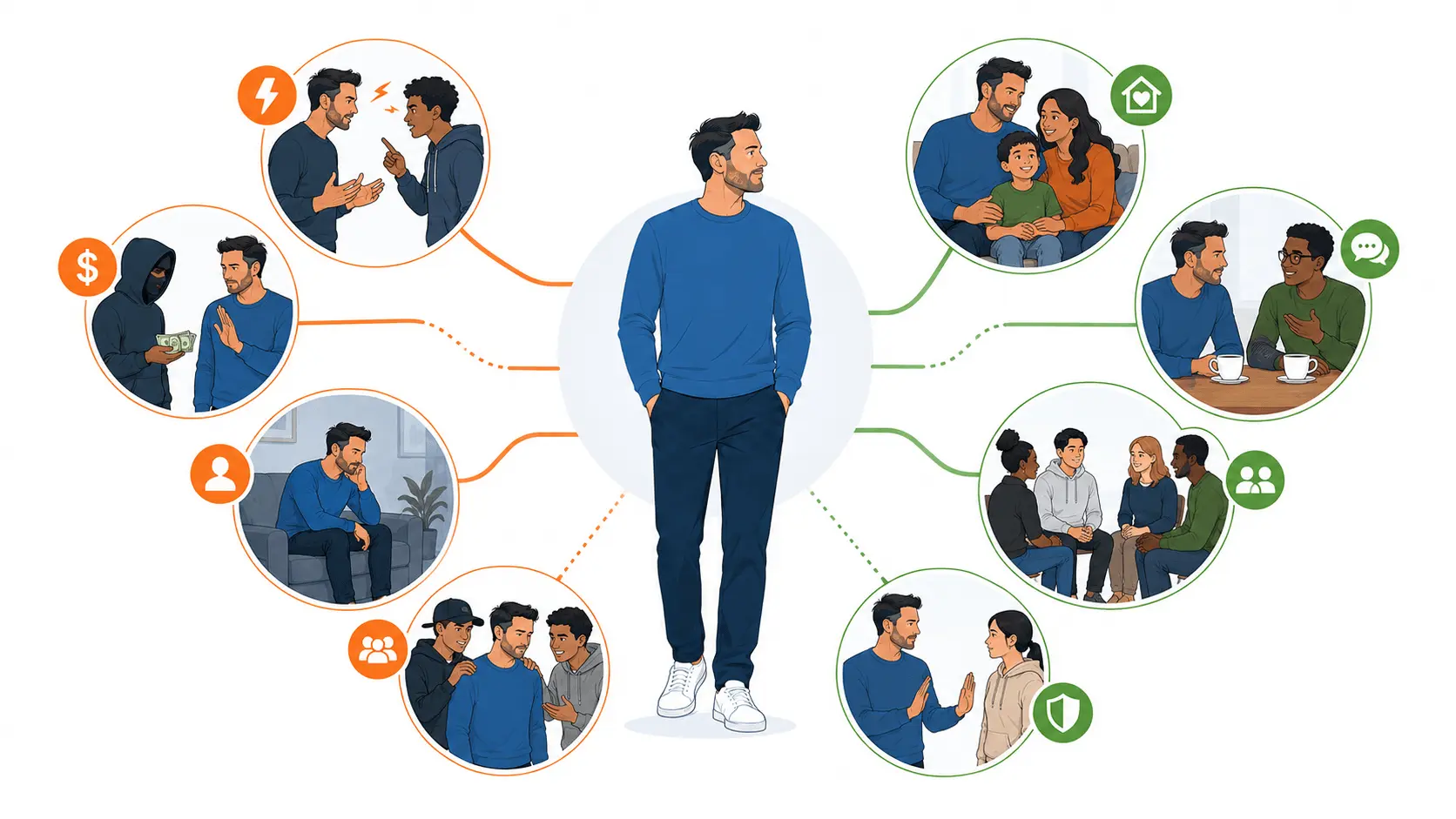
“I can help with food or a bill directly, but I’m not able to give cash.”
Belonging · boundaries · connection
People can protect recovery, increase risk, or do both at different times. The goal is not simply to remove relationships. It is to build connection that does not depend on one exhausted relative or one high-risk social world.
Last reviewed: 6 August 2026
Support without rescuing
A useful boundary describes what you will or will not do. It is different from trying to control another adult’s behaviour. Boundaries work best when they are discussed during a calm period rather than argued about during intoxication or crisis.
“I can help with food or a bill directly, but I’m not able to give cash.”
“I want to talk about this, but not while either of us is shouting or you are intoxicated. We can return to it later.”
“I can help with this appointment, but I can’t manage every call or crisis for you.”
There is no score. Relationships can move between zones as circumstances change.
Replace, do not just remove
If a person steps away from a social network built around alcohol, drugs, gambling or another shared routine, they can lose companionship, status and identity at the same time. A plan that only removes contact can create a vacuum.
Safety comes first
Domestic abuse, coercion, exploitation, violence and financial control are not problems to solve through better family communication alone. Safety planning and appropriate professional or safeguarding pathways may be needed.
Evidence links
Map the network
Try a short relationship-mapping activity below, then use the complete workbook for deeper boundary and support planning.